

There is a particular frustration that arrives somewhere in the forties and fifties. Nothing about the diet has changed. Nothing about the walking, the cooking, the portions has changed. The number on the scale changes anyway, and the strategies that worked at 30 stop returning anything at all.
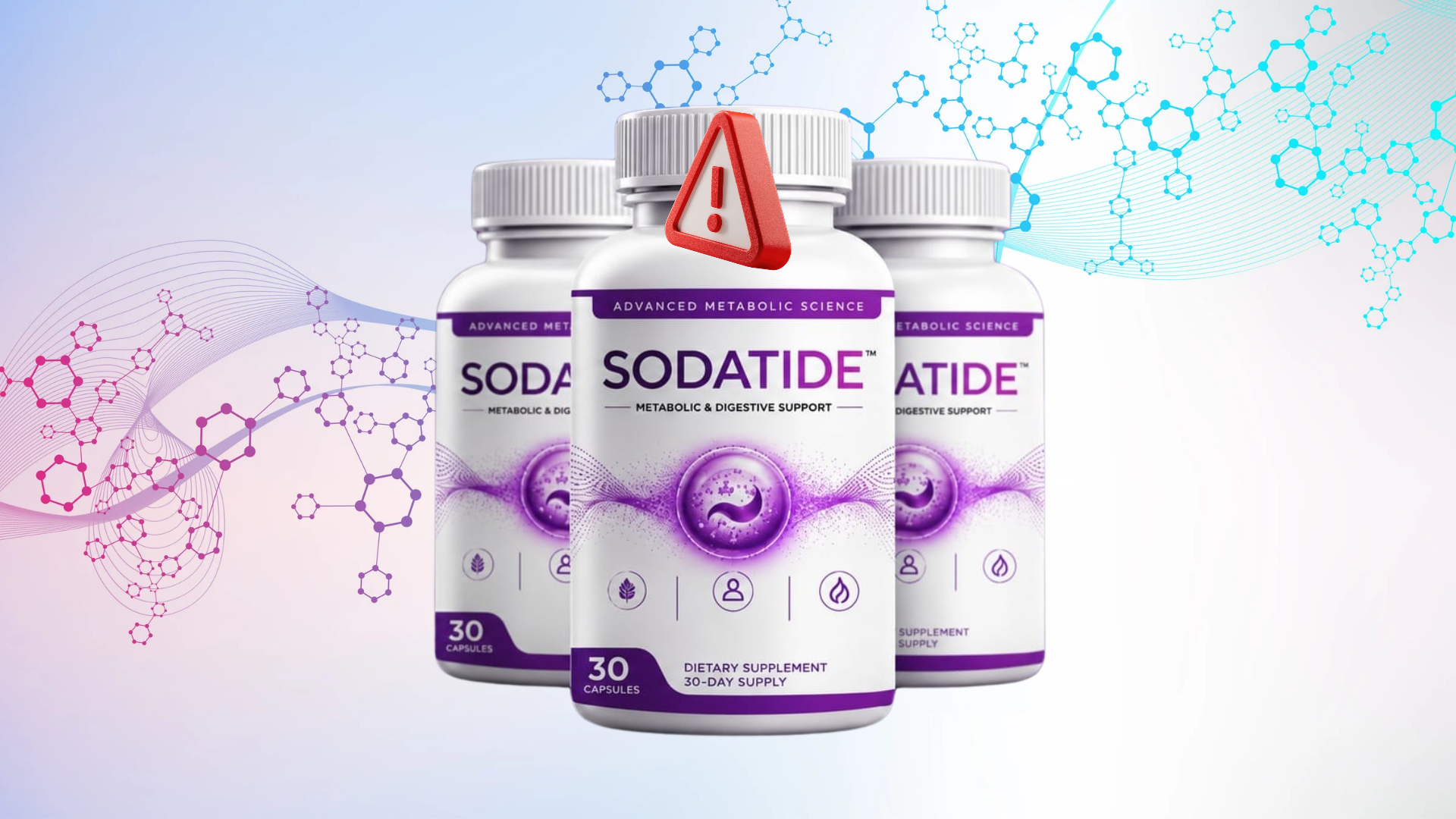
For a long time the advice offered in response was simply to try harder. More recently, researchers have been looking at what actually shifts during midlife, and a growing share of that attention has landed on the gut. That shift in focus is a large part of why SodaTide, a once-daily synbiotic capsule that launched in August 2026, has found an audience among women over 40.
Why midlife weight behaves differently, and where SodaTide comes in
Click here to see what SodaTide is and what goes into it. Several things change at once in midlife, which is what makes the problem so resistant to single fixes.
Muscle mass declines gradually from roughly the fourth decade onward unless it is actively maintained, and muscle is metabolically expensive tissue. Less of it means fewer calories burned at rest. Hormonal changes through perimenopause and after menopause alter where the body prefers to store fat, shifting it toward the midsection. Sleep frequently becomes lighter and more broken, which affects appetite hormones directly. And digestion often becomes less predictable, with bloating and irregularity showing up where neither existed before.
What ties several of these threads together is the gut. It plays a role in how efficiently energy is pulled from food, in how strong the satiety signals after a meal are, and in the day-to-day comfort of digestion. SodaTide is built to support that environment rather than to override appetite with stimulants.
What actually changes, and what SodaTide is designed to support
The product does not claim to reverse any of the underlying changes of midlife, and nobody should expect a capsule to. What it targets is narrower: the gut environment that sits underneath several of them.
You can see the full SodaTide label on the official page here. SodaTide is a once-daily vegetarian capsule, made in the United States in an FDA-registered facility, combining two prebiotic fibers with a three-strain probiotic blend. The fibers are chicory root inulin and potato resistant starch. The strains are Akkermansia muciniphila, Bifidobacterium infantis and Clostridium butyricum.
Why SodaTide contains no stimulants, and why that matters here
This is the detail that tends to matter most to the women looking at this category, and it is worth being specific about.
Here is where SodaTide publishes its stimulant-free formula in full. A large share of weight-loss supplements are built on caffeine or related stimulants. For someone already sleeping poorly, already dealing with warmth and heart-rate changes, a stimulant-based product can make the day worse in exchange for an appetite effect that fades by mid-afternoon. SodaTide contains no caffeine or stimulant of any kind. It can be taken alongside morning coffee, and it has no bearing on sleep later in the day.
Dr. Ethan Caldwell, MD, PhD, the Boston physician who formulated it and whose work spans endocrinology, metabolism and gut microbiome research, made that a design constraint from the start.
"I didn't want to create another weight-loss supplement built around stimulants and temporary appetite suppression," Dr. Caldwell says. "I wanted to ask a harder question: what can we do nutritionally to support the environment inside the body that healthy metabolism depends on? SodaTide came from that question."
The gut connection SodaTide targets
Open the official SodaTide page here to read the science behind it. Beneficial gut bacteria ferment dietary fiber into short-chain fatty acids, and those compounds do two jobs worth caring about.
They fuel the cells lining the colon, supporting the barrier that separates the gut's contents from the rest of the body. And they act as signals: research published in the journal Diabetes in 2012 showed that short-chain fatty acids stimulate the release of GLP-1, the gut hormone that slows stomach emptying, sharpens the insulin response to a meal and registers fullness in the brain.
When fermentable fiber is scarce, that signaling weakens. Most adults in the United States eat considerably less fiber than federal dietary guidance recommends, and research published in the journal Cell in 2016 found that fiber-deprived gut bacteria begin consuming the protective mucus layer of the gut instead, thinning the barrier it forms.
SodaTide supplies two specific fermentable fibers alongside three organisms selected to use them, which is what makes it a synbiotic rather than a plain probiotic.
What one SodaTide customer describes after menopause
"After menopause, I experienced severe weight gain and struggled to shed it. I thought my days of having a healthy body were over until I discovered SodaTide," reads a verified-purchase review published by SodaTide from Lauren Rio of Seattle, Washington. "After using it for 2 months, I'm now able to enjoy an active life and feel good about myself again. It has truly been a life-changing product."
Two months is consistent with the other featured accounts, which describe their clearest changes between the first and third month. Individual results vary, which is precisely what the guarantee exists for.
What is inside each SodaTide capsule
Click here to see today's SodaTide prices and what comes with each package. Chicory root inulin is a prebiotic fiber that Bifidobacteria use preferentially. A randomized controlled trial published in the American Journal of Clinical Nutrition in 2009 found that overweight and obese adults taking a closely related fiber for twelve weeks showed lower ghrelin, higher peptide YY and reduced body weight against placebo.
Potato resistant starch ferments more slowly and produces butyrate, the short-chain fatty acid that feeds the intestinal lining. A 2005 study in the same journal reported improved insulin sensitivity in healthy adults taking resistant starch.
Akkermansia muciniphila lives in the gut's protective mucus layer. A 2019 study in Nature Medicine supplemented overweight and obese volunteers with it daily for three months and reported improved insulin sensitivity and lower total cholesterol versus placebo. Bifidobacterium infantis breaks down complex carbohydrates, and Clostridium butyricum is a natural butyrate producer.
The capsule is 100% vegetarian and the formula is lactose-free.
How SodaTide fits into a daily routine
One capsule each morning with an 8-ounce glass of water, ideally before a meal, and the bottle goes in the refrigerator once opened to protect the live cultures.
Some extra gas in the first week or two is normal as the gut adjusts to a new fiber supply, and it settles. Anyone who is pregnant, nursing, under 18 or managing a medical condition should show the label to their doctor first.
Three habits make the routine work harder: consistency with the timing, more fiber-rich food where it is easy, and protecting sleep. That last one is not incidental. Research published in the Annals of Internal Medicine in 2004 found that short sleep was associated with lower leptin, higher ghrelin and increased hunger.
Why SodaTide users notice digestion and energy before the scale
Women trying this category often report the same sequence, and it is worth knowing in advance so the early weeks are not misread as failure.
Digestion tends to respond first. Regularity and comfort after meals are downstream of fermentation, and fermentation changes as soon as the fiber supply does. Energy through the afternoon is usually next. Appetite patterns follow, and they show up less as willpower and more as an absence: the late-afternoon raid on the kitchen that simply does not happen.
Body composition is the slowest and noisiest signal of the four, which is why judging a gut formula by daily weigh-ins tends to mislead. How clothes fit around the waist is a better weekly marker, and a short weekly note across those four things turns eight weeks of vague impressions into something readable.
Questions women over 40 ask about SodaTide
Will it keep me awake? No. There is no caffeine or stimulant in the formula at all, which is the main reason it appeals to this group.
Can I take it alongside other supplements? It slots into most routines without conflict. Anyone taking prescription medication should show the label to their doctor first, as with any supplement.
Is it vegetarian? Yes. The capsule shell is plant-based hypromellose rather than gelatin, and the formula is lactose-free.
Does it need refrigerating? After opening, yes. The live cultures keep better cold, and the label asks buyers to keep the bottle away from heat, light and humidity.
How long before deciding? Give it the full 60 days the guarantee covers. The featured accounts describe their clearest changes in month two and month three.
SodaTide pricing and the 60-day guarantee
Two bottles cost $79 each, $158 total, plus shipping. Three bottles cost $69 each, $207 total, with free US shipping. Six bottles cost $49 each, $294 total, with free shipping, working out to about $1.63 a day.
Three- and six-bottle orders include six digital bonus guides covering sleep, metabolism, gut health and a 10-day challenge, delivered with instant access and listed at a combined $358. Every order is a one-time payment with no subscription, backed by a 60-day money-back guarantee from the date of purchase with no conditions attached.
The bottom line on SodaTide for midlife metabolism
Nobody should expect a capsule to undo the metabolic arithmetic of aging. What the current research does suggest is that the gut sits underneath more of that arithmetic than anyone appreciated a decade ago, and that it responds to what it is fed.
SodaTide is a targeted, stimulant-free way to feed it: two prebiotic fibers, three studied strains, one capsule each morning, and two months to decide whether it earns a place in the routine.
Sources
Tolhurst G, et al. "Short-chain fatty acids stimulate glucagon-like peptide-1 secretion via the G-protein-coupled receptor FFAR2." Diabetes, 2012.
Desai MS, et al. "A dietary fiber-deprived gut microbiota degrades the colonic mucus barrier and enhances pathogen susceptibility." Cell, 2016.
Parnell JA, Reimer RA. "Weight loss during oligofructose supplementation is associated with decreased ghrelin and increased peptide YY in overweight and obese adults." American Journal of Clinical Nutrition, 2009.
Robertson MD, et al. "Insulin-sensitizing effects of dietary resistant starch and effects on skeletal muscle and adipose tissue metabolism." American Journal of Clinical Nutrition, 2005.
Depommier C, et al. "Supplementation with Akkermansia muciniphila in overweight and obese human volunteers: a proof-of-concept exploratory study." Nature Medicine, 2019.
Spiegel K, et al. "Brief communication: Sleep curtailment in healthy young men is associated with decreased leptin levels, elevated ghrelin levels, and increased hunger and appetite." Annals of Internal Medicine, 2004.